
Moving Beyond The Myth of The Instant Sisterhood Clique/Cult: Creating Community Sans Dogma, Control, and Sameness
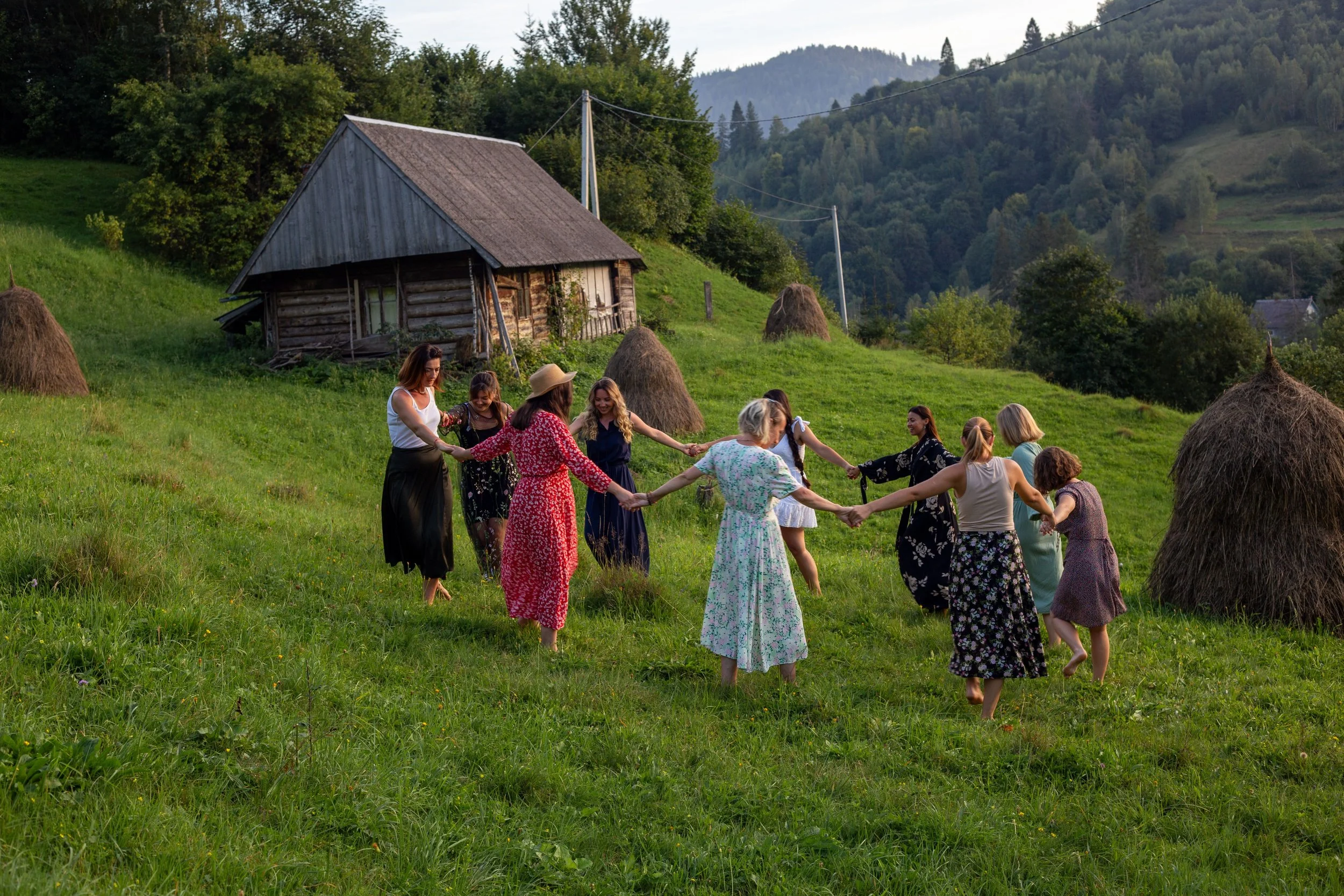
Moving Beyond The Myth of The Instant Sisterhood Clique/Cult: Creating Community Sans Dogma, Control, and Sameness
The word “sisterhood” carries a heavy, almost magnetic promise. For those who grew up in dysfunctional family systems—where safety was conditional, boundaries were crossed, and connection was fragile—the idea of a "chosen sisterhood" feels like a homecoming. It promises the unconditional belonging, safety, and mutual support that original family structures failed to provide.
When a commercialized group or facilitated space places "sisterhood" on a pedestal, on a sales page, or in an event title for people who have never met, it sets a subtle, high-stakes trap. What begins as a search for community often devolves into an emotionally volatile environment governed by unspoken rules, high dogma, and covert control.
1. The Weaponization of "Chosen Family"
When we carry a familial wound, we naturally seek environments to heal it. But when a facilitated container uses the language of deep, familial intimacy right out of the gate, boundaries get blurry fast.
True sisterhood isn't instantly generated through a transaction or a shared weekend retreat—it is built slowly over time through shared history, rupture, and repair.
When immediate, enforced intimacy is expected among strangers, a painful dynamic emerges:
* The Illusion of Immediate Safety: Group members open up their deepest vulnerabilities too quickly, assuming the environment has earned that level of trust simply because of the label on the door.
* Capitalizing on the Void: The commercialization of "sisterhood" trades on the deeply human need for belonging. When belonging is tied to a program fee or membership, questioning the space feels like risking your family.
2. The Mechanics of Harm: Dogma, Victim Blaming, and Control
Inside toxic container dynamics, harm rarely looks like explicit hostility. It usually wears the soft, gentle face of "healing" and "elevation."
Toxic Positivity & "Victim Consciousness"
When someone brings authentic grief, rage, or systemic pain into the room, facilitators unequipped for real shadow work often weaponize spiritual jargon:
* “You’re just operating from victim consciousness.”
* “What is this mirror showing you about your own vibration?”
* “Can you find the blessing in that trauma?”
This isn't empowerment—it's covert gaslighting. It silences valid dissent, bypasses reality, and places the entire burden of structural or interpersonal harm back onto the individual.
Feminine Embodiment as a Silencing Tool
Too often, "feminine energy" inside these circles is defined through a very narrow, dogmatic lens: docile, soft, fluid, passive, and agreeable.
Women are subtly encouraged to shrink their voices so they don't "disrupt the container" or "bring heavy, masculine energy into the room." This keeps the crowd manageable, meek, and easy to lead, ensuring the person holding the microphone remains the unquestioned authority figure.
The Dogma of Sameness
In these environments, empowerment is quietly replaced with compliance. There emerges an implicit code for everything:
* How you should dress, eat, and present yourself.
* Which hygiene products or lifestyle practices are "clean" or "aligned."
* How your body ought to age, move, and hold space.
Anyone who deviates from this ideal is gently ostracized with passive-aggressive phrases like, "Maybe this space just isn't aligned for where you're at right now." Underneath the soft words is an old, familiar dynamic: conformity as the price of belonging.
3. The Untamed Feminine: Beyond Softness and Service
When mainstream culture—or dogmatic group environments—talks about "feminine energy," it usually gets flattened into a very narrow, palatable aesthetic. We are told the feminine is receptive, open, soft, motherly, yielding, and serviceful. We are encouraged to flow, to surrender, and to maintain the peace.
But when femininity is defined strictly as passivity, it becomes a cage disguised as a sanctuary. It strips away our instinct, our boundary-making capacity, and our raw power.
True archetypal femininity is not a monolith, and it certainly isn't always gentle.
The Primal Reality of the Archetypes
If we look at ancient mythology and the intelligence of the natural world, the divine feminine has always possessed a fierce, uncompromising edge:
* The Lioness: She is not waiting passively to be provided for, nor is she meek. She is the chief strategist and primary hunter of the pride. When her cubs are threatened, her energy isn't a soft embrace—it is unsheathed claws, strategic precision, and relentless defense. She mauls what seeks to destroy what she loves.
* Goddess Kali: In the Hindu pantheon, Kali does not represent quiet compliance. Depicted wearing a necklace of skulls and holding a severed head, she is the force that ruthlessly dismantles ego, spiritual bypass, and illusion. She destroys not out of malice, but because true protection and liberation require cutting away what is toxic and corrupt.
* Sekhmet: The Egyptian lioness goddess of war and healing whose breath was said to create the desert, embodying the fire that burns away disease, hypocrisy, and corruption.
Reducing the feminine to a standard checklist of appearance, diet, tone of voice, or behavioral modesty is a tactic of control. Femininity takes infinite expressions—it is the roar just as much as it is the murmur; the boundary that says "No further" just as much as the arms that open to welcome.
And crucially: femininity isn't for everyone, and that is entirely valid. We do not need to force every person into a gendered energetic box to validate their worth, presence, or authority.
4. The Need for Harm Reduction and Shadow-Informed Leadership
Group spaces that call people into deep emotional vulnerability carry a profound duty of care. Yet, many facilitators step into positions of authority without understanding trauma responses, group dynamics, or projection.
Without rigorous harm-reduction protocols, unexamined leadership inevitably reproduces the very dynamics of the dysfunctional families people came to escape:
* Facilitators Must Do Their Own Shadow Work: Unexamined needs for validation, authority, or maternal devotion will always leach into the group. When a leader hasn't integrated their own power wounds, they will naturally use their followers to feed their ego.
* Recognizing Projection and Transference: Members naturally project parental or familial dynamics onto leaders. Unaware facilitators exploit this to build a devoted following rather than guiding participants back to their own internal authority.
* Trauma-Informed Frameworks: Facilitators need training in clear boundaries, explicit consent protocols, and accessible, non-defensive rupture-and-repair procedures rather than relying on spiritual authority to bypass harm.
5. Moving Beyond False Sisterhood: Reclaiming Sovereign Connection
We don't need another dogmatic container promising a false, sanitized sisterhood. We need spaces that honor the wild, diverse complexity of human beings across all genders and expressions.
True community isn't about blending into an aesthetic or proving how "aligned" or "feminine" we can be. True connection is about sovereign individuals coming together without needing to look, think, or move alike.
What Authentic, Empowered Space Looks Like:
* Celebrating Differences Over Sameness: We don't need everyone to fit a specific blueprint. True power lives in honoring distinct perspectives, unique life stories, and individual superpowers rather than enforcing capitalism-driven sameness.
* Expanding Beyond Gendered Norms: True liberation leaves room for the fierce, the loud, the rugged, the sharp, the quiet, and everything outside or between gendered boxes.
* Refusing to Stay Small: Humanity is at a critical juncture. Shrinking ourselves to keep the peace, avoiding conflict, or trying not to make waves only serves the status quo.
When we step out of dogmatic "sisterhoods" and into authentic, sovereign relationships, we stop looking for leaders to parent us or groups to define us. We show up as full adults—unapologetic, powerful, and ready to stand shoulder-to-shoulder to shape a world that actually serves us all.
Ready to Step Into Sovereign Power?
If this piece resonated with you, it might be because you’ve felt the quiet sting of spiritual dogma, the pressure to shrink into a pre-packaged box, or the exhaustion of searching for community from a place of hunger rather than sovereignty.
Joining group spaces, rituals, or gatherings isn't inherently bad—but where you enter them from changes everything.
When you step into a circle seeking a savior, a parent figure, or an immediate surrogate family, you become vulnerable to manipulation and subtle control. But when you do the internal shadow work, heal your core attachment wounds, and stand rooted in your own authority, the dynamic shifts entirely:
You stop looking for external leaders to grant you permission or validate your worth.
You spot spiritual bypassing, toxic positivity, and subtle control mechanisms immediately.
You retain your voice, your wildness, and your boundaries—no matter how persuasive the room is.
You can participate in community out of choice, enjoyment, and mutual resonance, rather than desperation.
Work With Me
I guide individuals through deep, somatic shadow work to unpack inherited dogma, dismantle internalized compliance, and reclaim their authentic power. Together, we clear the unmet needs that leave you open to manipulation so you can stand fully in your own sovereign truth—in community, in leadership, and in life.
If you are ready to stop shrinking, untangle from false promises, and step into an unshakeable connection with your own strength:
Click Here to Explore 1:1 Mentorship / Book a Discovery Session
