
Alive in Color: Grief, Desire, and the Courage to Become More of Yourself
There are seasons when grief reminds us just how precious this one wild life really is.
This week, I’ve been thinking a lot about that.
We’ve been talking about grief, self-intimacy, community, and the importance of orienting toward balance—not because grief should be minimized or rushed through, but because we deserve to remain connected to ourselves while we move through it.
Grief asks us to feel.
And sometimes, it also asks us to choose.
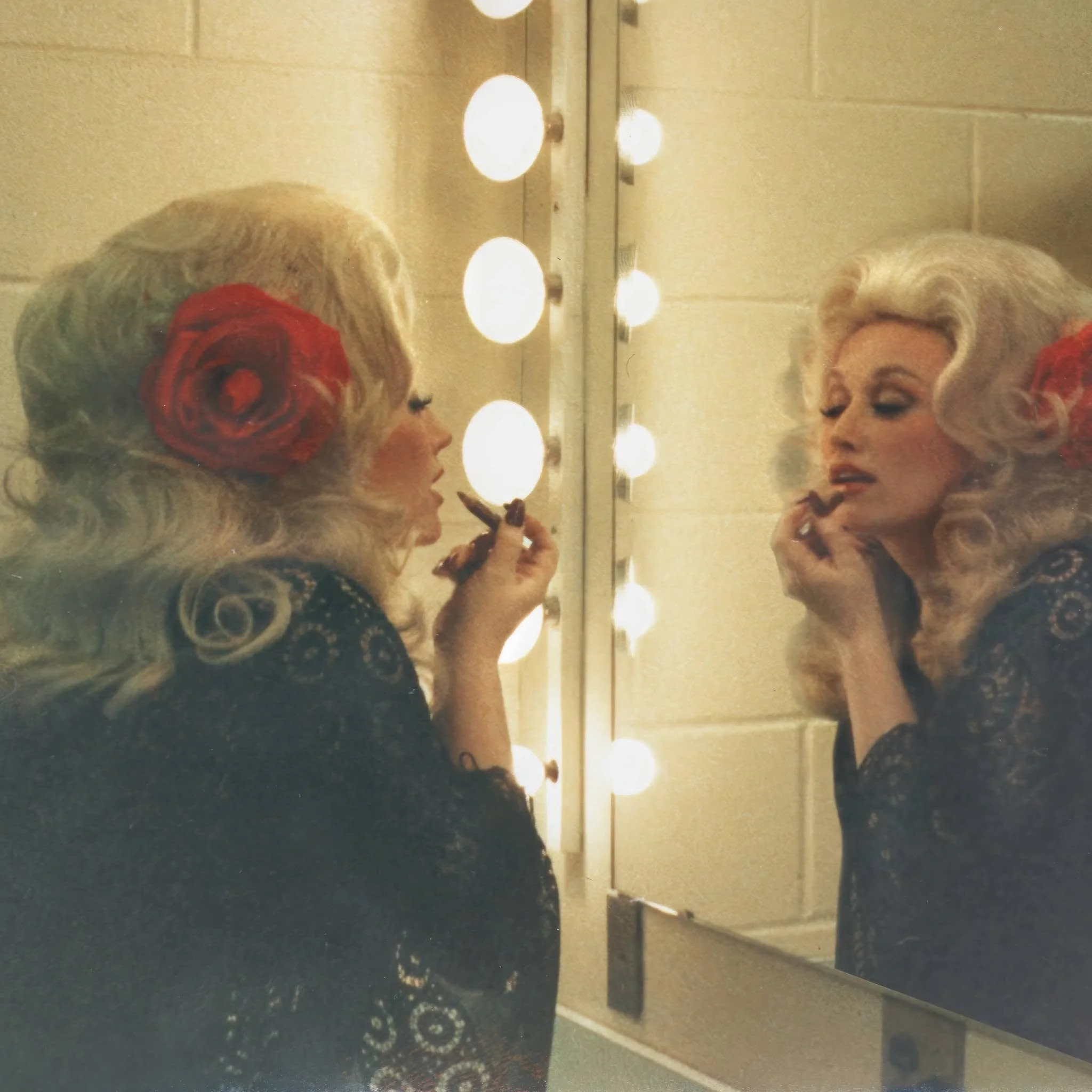
This week, the world lost two people who have profoundly shaped my own relationship with creativity, queerness, performance, courage, and unapologetic self-expression: Dolly Parton and Tim Curry.
Their work touched very different corners of the cultural landscape, but both, in their own ways, gave me permission to become bigger.
Dolly taught me something about being underestimated and refusing to shrink because of it. She built an extraordinary life out of talent, humor, generosity, business savvy, beauty, grit, and an enormous capacity to dream. She could be glamorous and silly, tender and powerful, deeply feminine and completely her own person.
Tim Curry gave me another kind of permission.
Dr. Frank-N-Furter was one of those characters who rearranged my understanding of what was possible. The theatricality. The sensuality. The gender-bending. The humor. The delicious refusal to behave according to the rules.
For a queer performer, there was something profoundly liberating about watching someone inhabit that kind of outrageousness.
And this year, after taking last year off to heal from major surgery, I'll be stepping back onto the stage as a Transylvanian again.
There is something incredibly meaningful about returning to something you love after your body has required you to stop.
We don't always get to choose what changes us.
But we do get to choose what we do with what has changed us.
What if getting older isn't about becoming smaller?
I think many of us were taught, explicitly or subtly, to become more manageable as we grew up.
Be less loud.
Be less sexual.
Be less strange.
Be less needy.
Be less queer.
Be less ambitious.
Don't take up so much space.
Don't want too much.
Don't ask for too much.
Don't make other people uncomfortable with the full expression of who you are.
And for many creative, kinky, queer, adventurous, sensual people, there can be years of conditioning layered on top of that.
Sometimes we learn to hide our desires before we even understand them.
Sometimes we learn to perform acceptability so well that we lose track of what actually feels alive inside us.
And then something happens.
We lose someone.
Our body changes.
A relationship changes.
We reach a milestone.
We survive something.
We realize that time isn't infinite.
And suddenly the question becomes:
If I'm going to be here, in this one beautiful life, what do I actually want to do with it?
Not what should I want.
Not what would make everyone else comfortable.
Not what would make me easier to love.
What do I want?
That question can be terrifying.
It can also be incredibly liberating.
Your sexuality gets to evolve, too.
One of the things I love about sexuality is that it isn't a static identity card.
Our sexuality can change as we become more present.
As we become safer in our bodies.
As we heal.
As we discover new parts of ourselves.
As we stop performing sexuality for other people and begin experiencing it from the inside.
You may discover that the things you thought turned you on don't anymore.
You may discover things you didn't even have language for before.
You may become curious about toys, kink, group play, opening your relationship, different relationship structures, queerness, gender expression, power, surrender, dominance, submission, sensation, fantasy, or forms of intimacy you never imagined wanting.
Or you may discover that what you really want is something much simpler: more tenderness, more presence, more play, more honesty, more freedom to be fully yourself with someone.
There is no required destination.
The work is learning how to listen.
And sometimes listening reveals a gap between the life you're currently living and the life your deeper self is asking you to explore.
That gap isn't necessarily a problem.
Sometimes it's an invitation.
Becoming more yourself also means learning how to let other people know you.
This is where intimacy gets really interesting.
Because being deeply yourself doesn't mean expecting other people to magically know how to love you.
We have to learn how to communicate.
How to name our desires.
How to articulate boundaries.
How to ask for what we need.
How to hear someone else's no without collapsing.
How to say no without abandoning ourselves.
How to stay connected to ourselves when someone is disappointed.
How to repair when something goes sideways.
How to have consent conversations that aren't just about whether something is technically allowed, but about whether everyone involved actually feels present, resourced, willing, and connected.
And how to come back to each other after a rupture.
These are skills.
They can be learned.
And honestly, I am actively practicing them in my own life, too.
I don't believe in teaching from some imaginary mountaintop where I've figured everything out.
I'm in this work.
I'm learning how to create deeper connection, how to communicate more clearly, how to stay connected to myself while moving toward intimacy, and how to participate in relationships that can hold more truth, complexity, desire, and depth.
Especially now.
As we move into this second half of life, I think many of us are being asked for a higher quality of connection.
Less pretending.
Less performing.
More honesty.
More courage.
More curiosity.
More repair.
More willingness to say:
This is who I am. This is what I want. This is what matters to me. Can we meet each other here?
And sometimes, we need a place to practice.
That's a big part of why I do the work I do.
In my 1:1 work, we can explore the places where you've gotten disconnected from yourself—your body, your desire, your voice, your boundaries, your creativity, your sexuality, your sense of possibility.
And in couples work, we can slow things down enough to understand what's actually happening underneath the conflict, the longing, the avoidance, the sexual disconnect, or the stuck places.
We can work with communication, consent, desire, intimacy, repair, relationship dynamics, and the courageous process of becoming more fully known.
You don't have to arrive with everything figured out.
Curiosity is enough.
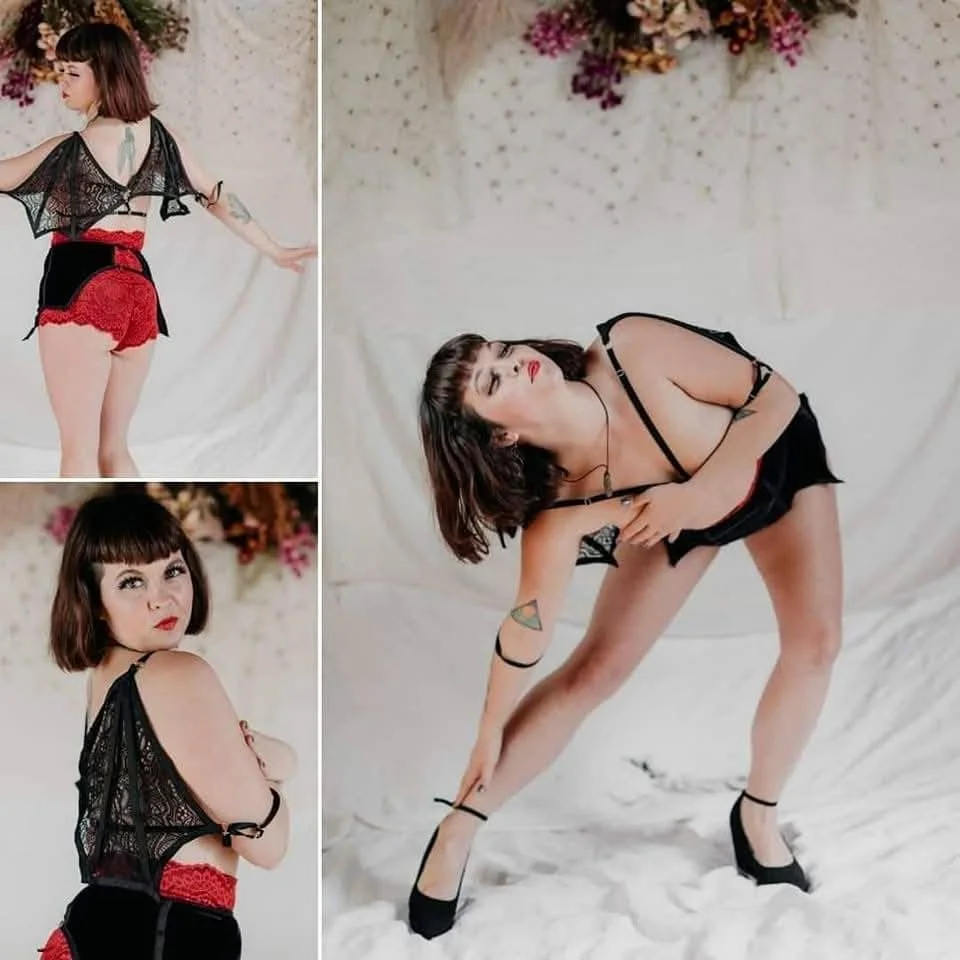
Come play with me.
I'm also creating spaces where we can explore connection, embodiment,
play, curiosity, and community in more experiential ways.
The Cuddle Lab is one of those spaces.
It's an opportunity to slow down, practice presence and connection, and explore the
ways our bodies communicate safety, boundaries, desire, affection, and connection.
And I'm excited to also be part of Lady Camp—a space for adventure,
connection, exploration, and coming more fully into your own expression.
I love creating spaces where people don't have to leave their complexity at the door.
Bring your questions.
Bring your curiosity.
Bring your awkwardness.
Bring your desire.
Bring your playfulness.
Bring the parts of yourself you've been taught are "too much."
There is room.
A little invitation for this week
Take ten quiet minutes sometime this week.
Put your phone down.
Feel your body.
Look around the room.
Notice what is here.
Then ask yourself:
What am I more ready for than I was five years ago?
And:
What part of me am I still asking permission to be?
Don't force an answer.
Just listen.
Maybe something surprising comes forward.
Maybe something you've known for years finally has words.
Maybe grief is sitting beside you.
Maybe desire is.
Maybe both.
You don't have to choose between honoring your grief and living fully.
You can carry what you've lost and still make something beautiful.
You can miss people and still laugh.
You can be tender and outrageous.
You can be grieving and turned on by life.
You can be healing and becoming.
You can be deeply aware of how temporary everything is—and let that awareness make you more alive, not less.
That, to me, is part of the invitation of this season:
Don't make yourself smaller to make the world more comfortable.
Find your colors.
Find your people.
Find your voice.
Find your pleasure.
Find the places where you can be known.
And then practice being brave enough to let yourself be seen.
