
When your hands are full (and all the adults want to leave the building)
When Life Fills Your Hands: On Capacity, Presence, and the Art of Letting Go
A Newsletter from Becoming Themself — Sex & Relationship Coaching
Have you ever had one of those weeks where everything lands on your body at once?
Someone you love gets sick. A big deadline looms. Family is visiting. Your partner’s nervous system is fried. The house is a mess. And somewhere in the middle of all of it, you realize your hands are completely full—and someone just tossed you one more heavy thing to hold.
This is what we call capacity—and it might be the most important somatic principle nobody talks about enough.

Purity culture isn’t just about saving yourself for marriage. It is an engine built on two broken premises, using the dehumanization of one to enforce the oppression of the other. It is a system designed to teach you who owns your body long before you ever get the chance to inhabit it.
To unravel it, we have to look at the full truth of what it did to all of us.
You Only Have Two Hands
We have one body. One nervous system. One heart. Two hands. And we can only inhabit one place at a time. That's not a character flaw or a failure of willpower—it is the baseline fact of being human.
Capacity is your natural ability to hold what life is asking of you in any given moment. And it fluctuates. Some weeks you feel electric, grounded, and expansive—bring it on, I have room for all of it! Other weeks, getting through breakfast feels like a full-body Olympic event.
The trouble is, most of us were conditioned by purity culture, productivity dogma, and people-pleasing never to check in with our actual capacity. We look at our calendars and think, "Well, technically I could be there at 3, and then there at 5, and then home by 7…"
We mistake scheduling for presence. We forget to ask the deeper, somatic question: Can my body actually be here for any of it?
Because physically showing up and being emotionally, sensorially present are two entirely different universes.
The Perfection Trap (And the Performance of Love)
Here is a sneaky truth: perfectionism often disguises itself as care.
We tell ourselves: "If I really loved them, the house would be spotless when they arrive. If I were a good parent, I’d have prevented this pain. If I were a secure partner, I’d have all the answers and never get triggered."
But perfection actually steals from presence. When we are consumed by how things should look or how palatable we should be, we abandon how things actually are.
And here’s a secret your body already knows: the people who love you want real over perfect. Every single time.
The messy kitchen where two people are having an unvarnished, authentic conversation? That's intimacy.
The staged, spotless home where everyone is silently bracing and exhausted? That's performance.
It is okay for the floors to stay dirty today. It is okay to drop the mask and say: "I am completely at capacity right now, I'm so glad you're here, and I could really use a hand." That kind of vulnerability is a gift of trust, not a failure.
A Somatic Practice: "Being Here With You"
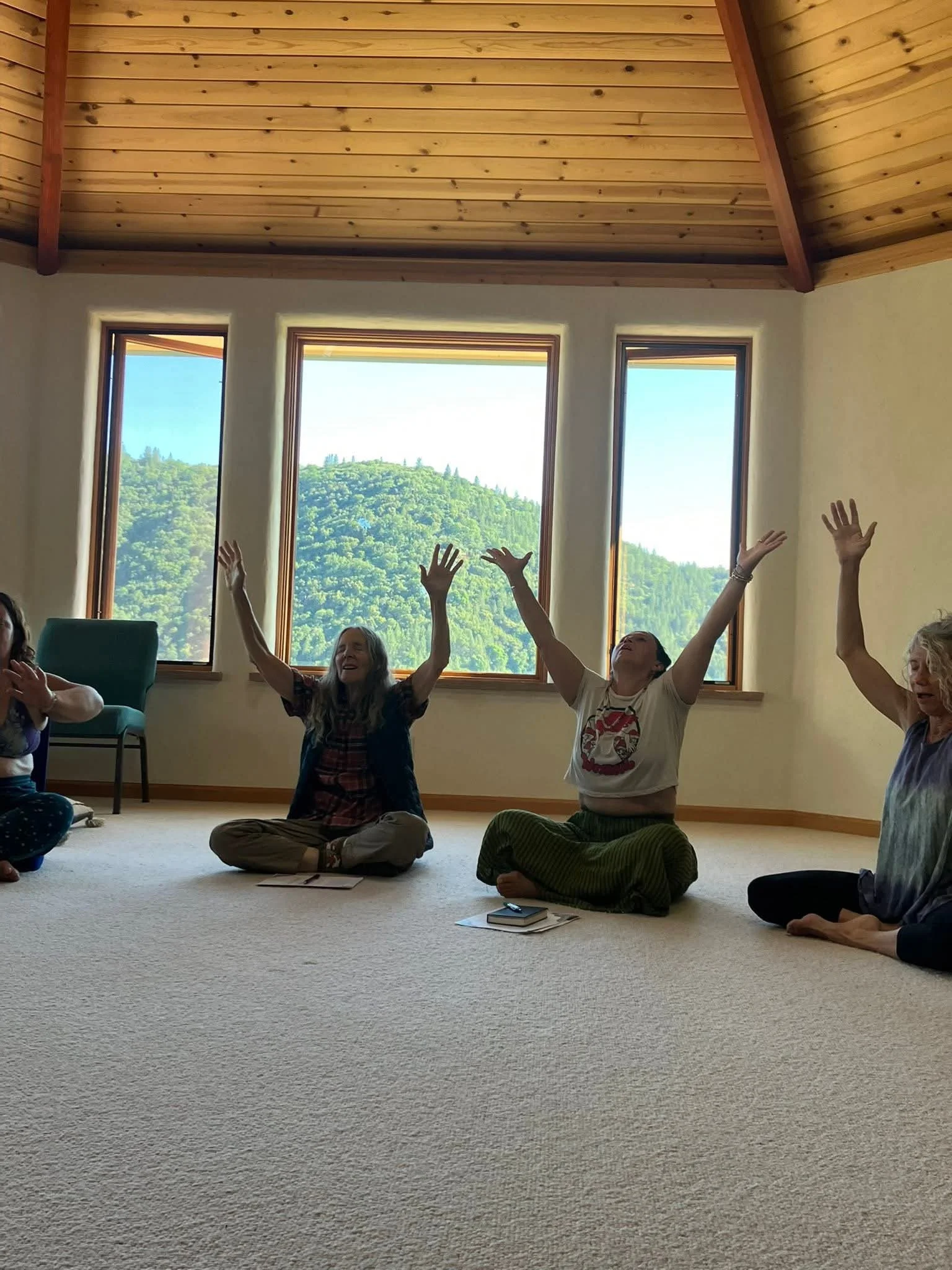
One of the most powerful practices I offer clients—and honestly, one of the primary anchors I use in my own life—is a sequence I call "Being Here With You."
It starts with building a landing strip right in the center of your own being first.
When stress piles up, our nervous system jumps out of the present moment. The brain starts future-planning, problem-solving, running worst-case scenarios, and bracing for impact. It feels productive, but it is actually draining your battery at double speed.
Try this 3-step sequence:
Breathe into your body: Start at your chest. Move into your belly. Let your breath drop all the way down into your pelvis. Feel the boundary of your own tissue and land in your skin.
Turn onto yourself first: Before you try to fix, soothe, or connect with anyone else, notice what is happening inside your own container. What am I feeling right now? What does 5% more comfort feel like in this moment?
Connect outward on your terms: Only when you feel anchored inside yourself (and not a second sooner), let yourself receive the presence of whoever is with you. A partner. A friend. A child. Or even the quiet of an empty room.
This isn't about shutting people out—it's about putting on your own oxygen mask so you aren't showing up hollow. When we skip self-sourcing, we show up as a ghost: physically present, but somatically gone.
When you practice this, a circuit of connection forms—first with yourself, then with others. It feels like a deep exhale, a co-regulation, an energetic hug. That is what presence does. It creates an authentic feeling of safety that no amount of over-planning or perfection can ever match.

Maximize What's Possible. Deal With What's Not.
This is my favorite reframe for navigating an overwhelming life:
Maximize what is possible. Deal with the disappointment of what is not.
Every day carries a different capacity. Some days, the most life-giving thing for your relationship is snuggling on the couch while the kids are at school. Other days, the best thing is giving each other wide, loving space to be grumpy alone. Both are valid. Both can be the "best day possible"—if you are honest about where your nervous system actually is.
Ask yourself two honest questions each morning:
What is actually possible today? (Not what should be possible. Not what was possible last Tuesday. What is real and doable right now?)
What is NOT possible today? (Can I let my body feel the grief or disappointment of that edge, rather than forcing myself to push through it?)
Sometimes what's not possible is a clean house. Sometimes it's a deep, resolution-focused conversation with your partner. Sometimes it's feeling 100% secure.
Naming what is not possible lets your nervous system stop its chronic bracing. It tells your small, protective parts: "We aren't carrying that today. We have permission to rest from trying."
Empathy Over Apology
When someone we love is disappointed—in us, in life, in the situation—our reflexive conditioning is to say "I'm sorry."
While that comes from a well-intentioned place, it can accidentally create a promise we cannot keep. "I'm sorry" often carries the quiet contract: I will fix this and never let it happen again. And as humans with limited capacity, sometimes we simply can't fix it.
What’s far more transformational? Empathy.
Instead of "I'm sorry I disappointed you," try:
"I can see you're really disappointed right now. That makes so much sense."
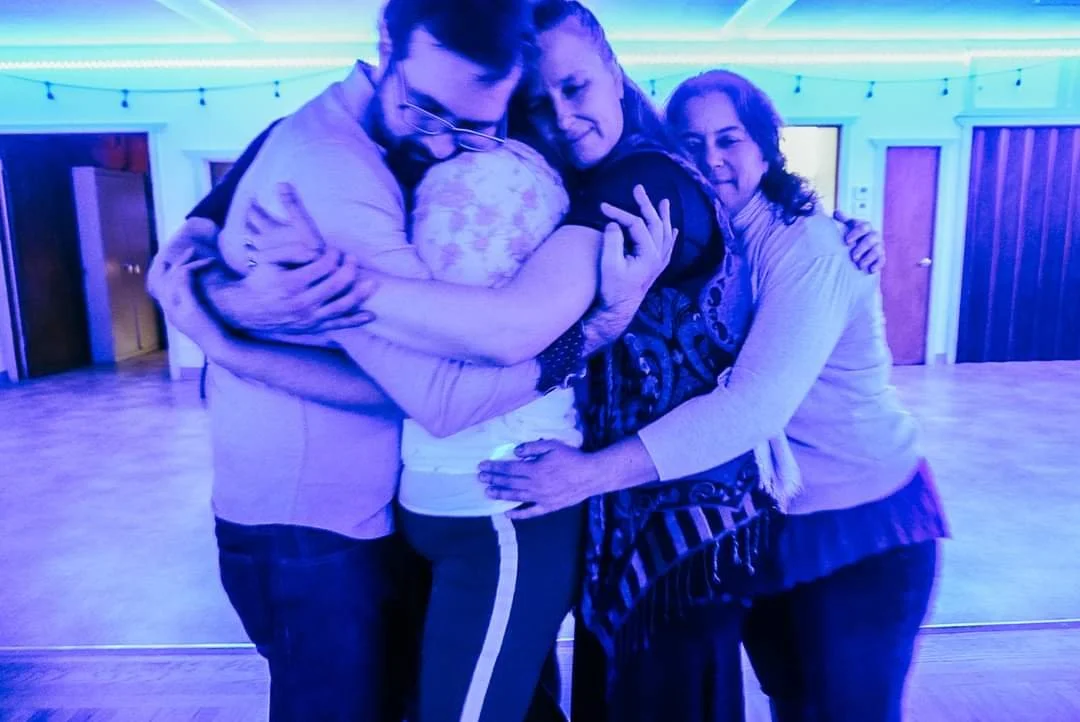
No fixing. No defending. No building a legal case for why you did what you did. Just: I see you. I see that this hurts, and I can hold space for your feeling without abandoning myself.
But here’s the catch—you cannot offer that kind of presence if your own cup is bone dry. When someone comes at us with their hurt, and it lands on one of our tender spots, our inner children want to grab the microphone. We get defensive. We want to be right.
So before you respond, go inside first. Tend to the part of you that feels blamed, scared, or over-extended. Take a breath into your own belly. Then, with the wisdom of your adult self, turn toward them with curiosity.
Empathy isn't about getting the words perfect. It's about being regulated enough to walk in their shoes for a moment.
Your Resource Basket
One final invitation: build yourself a resource basket.
This is simply a mental or written list of simple, non-judgmental anchors that help bring you back to your body when the world gets loud:
A slow, barefoot walk on the earth
A warm cup of tea, held with both hands while noticing its weight
Three deep exhales with a soft vocal sigh
Moving or dancing out the day's stagnancy to a favorite track
Offloading with a trusted confidant who doesn't try to fix you
Lying flat on the floor for five minutes to let the earth hold your back
These are not frivolous luxuries. They are nervous system regulation. They are how you refill your well so you can keep showing up—for your loved ones, your work, and most importantly, for your own wild, sacred life.
Ready to Explore Connection More Deeply?
Whether you're looking for personal support or a space to experience connection with others, there are ways to explore this work with me.
Work With Me 1:1
Explore your relationship with yourself, your body, and the people you love through personalized somatic coaching.
Link: https://partiful.com/e/vOu9vrOGMVAhqaOSckWD?c=2LJCCM7E
Curious About Connection Without Pressure?
Join us at Cuddle Lab, an experiential workshop where we explore consent, communication, boundaries, and platonic touch in a welcoming, supportive environment.
Every exercise is optional, and you're always encouraged to honor your own boundaries and move at your own pace.
Join Us at Cuddle Lab
I'd love to welcome you into whichever space feels right for you.
Link: https://partiful.com/e/vOu9vrOGMVAhqaOSckWD?c=LGhkQf5i
The Bottom Line
You are not a machine built for endless output. You are a human being with a limited, beautiful, ever-changing capacity.
The bravest, most liberated thing you can do today is tell the truth about what is possible—and lovingly let go of the rest.
You don't have to hold it all. You just have to be here.
Stay wild,
Rachel Levesque
Founder of Becoming Themself
Somatica® Certified Sex & Relationship Coach, Intimacy Coach, & Bodyworker
