
Beyond "La La Land": Finding Belonging at the Intersections of Queerness, Neurodivergence, and Erotic Play
Have you ever walked into a room and felt instantly visible for one part of yourself, while the rest had to be left at the door?
In queer spaces, you might be welcomed for your sexuality, but your fast-moving, hyper-fixated, or neurosparkly brain feels like a misfit. In neurodivergent spaces, your brain style is celebrated, but your fluid, bisexual, or pansexual identity might feel sidelined or hard to explain.
When your identity is a mosaic, it can feel nearly impossible to describe who you are to someone else. Getting familiar with the feeling of being truly understood isn't a given. Unless you’re in a hyper-specific affinity group, most people won't grasp your intricacies just by looking at you.
Even though many of us don't feel completely comfortable opening up deeply about our intricate inner lives, this vulnerability is precisely what creates the flow of intimacy in our relationships. Without it, we stay hidden in plain sight.
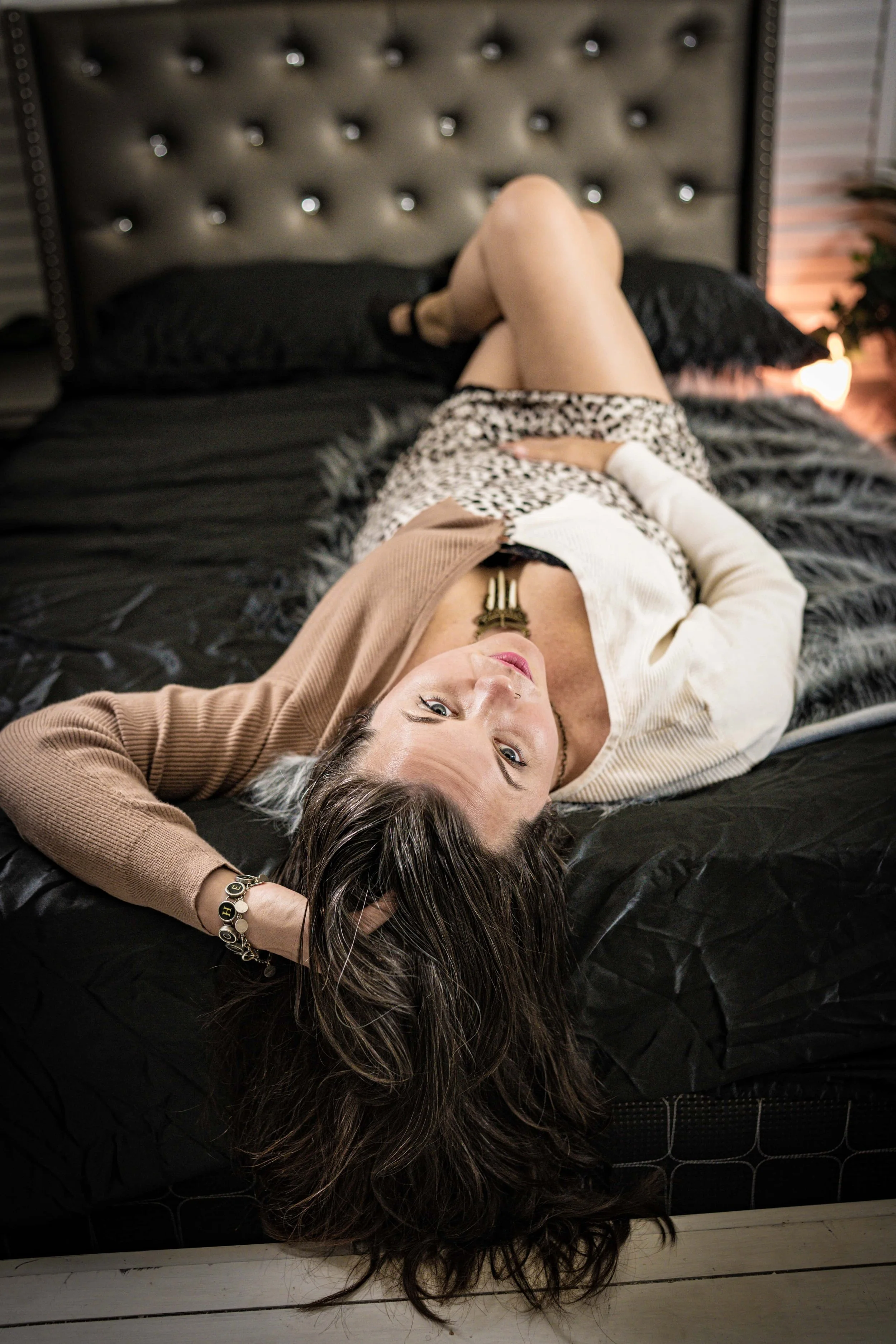
"My own neurosparkly, queer inner world is a vibrant, fast-moving mosaic—a place of wild imagination, intricate desires, and boundless curiosity. For years, I didn't know how to translate that inner richness into the outer world without feeling like 'too much' or completely misunderstood. Learning how to bring my whole self out of my mind and into somatic, relational reality changed everything for me. It's the exact path I walk alongside my clients today."
— Rachel
John’s Story: From Sacred Imagination to Deep Isolation
To show you what this looks like in practice, I want to tell you about a typical client I work with.
Let’s call him John.
John is a neurodivergent, bisexual man raised in a strict religious community that equated desire with sin. Yet despite the shame woven into his upbringing, he was naturally drawn to connection. As a child, he loved the warmth of cooking and sewing with his mother and grandmother, just as much as he loved working on the farm with his father.
He also possessed a vast, rich inner world. But as his imagination bloomed, so did his fear: What if non-believers or impure thoughts were corrupting my mind?
When John was small, he felt warm, fuzzy feelings for both his friend David and his friend Jennifer. After an innocent, curious moment playing with Jennifer was discovered by her mother, the reaction was swift and terrifying. Spankings, fear of divine wrath, and social ostracization followed. Jennifer was no longer allowed to play with him. Shortly after, at age nine, John was diagnosed with ADHD. His rich inner world became his refuge—a "la la land" where he retreated to avoid the shame of failing to focus or fit in.
By his teens, John found solace in sci-fi, video games, and online chat rooms for ADHD and bi-curious folks. Anonymity felt safe, but the fear of actually being known kept him isolated. The shame followed him everywhere—even into his own mind.
The Slow Journey Out of the Shadows
Leaving home at 18 was a survival tactic.
In college, John took a sociology class and met Rebecca, a delightfully quirky classmate who felt as "weird" and hard to understand as he felt. Terrified of repeating the past and hurting her, he moved slowly. But as they took Human Sexuality together the following year, their bond deepened. Rebecca became a safe harbor.
Over the next decade, John made major developmental leaps: graduating, building a career, and deepening his partnership with Rebecca. Yet by age 28, the "shame monsters" still lingered. He missed the deep sense of spiritual community he’d felt in church as a boy, but he had no idea how to create it as an adult without hiding who he was. Large parts of himself felt fragmented, distant, and frozen in fear.
That’s when John and I began working together.
Reclaiming the Intersections:
Somatic Work, Experiential Practice, and Relational Repair
In our coaching work, we didn't just talk about John’s past—we worked with it somatically and experientially.
* Building the Internal Safe Parent: We engaged in deep inner-child work, cultivating a strong, compassionate internal parent voice to offer the protection and acceptance his nine-year-old self never received.
* Integrating Spirituality and Sexuality: We explored how to bring a grounded, spiritual presence into his sexual experiences, transforming sex from a source of fear into a space of sacred connection.
* Boundaries, Consent, and Rejection: We practiced somatic boundary work and consent frameworks so John could express his desires and fantasies without the paralyzing fear of "hurting" someone or facing divine retribution.
* Restoring the Maternal Bond: Realizing how deeply early rifts impacted both John and his mother, we facilitated dedicated healing sessions together. We held space for both of them to integrate the years of lost time, distance, and fear—allowing his mother to arrive at a place of true understanding and acceptance, while giving John space to grieve and heal the emotional disconnect.
* The Power of Experiential Practice: Through relational exercises and somatic group work, John got to feel in his body what it’s like to be seen and accepted in real-time—not just in theory.
Through this work, John realized he wasn't broken or dangerous; he was simply carrying unintegrated shame at the intersection of his neurodivergence and his sexuality.
A Life Fully Expressed
Today, John’s life looks radically different.
He and Rebecca thrive in an open relationship built on deep trust, secure attachment, and active cheerleading for each other's growth. They found a spiritual home at a local Unitarian Universalist church with a queer pastor and a welcoming congregation. At home, they host a monthly D&D campaign, attend kinky book clubs, and step into spaces where neurosparkly, queer folks hang out and celebrate their full spectrum of self-expression.
John no longer hides in his inner world. He lives here, in a life full of color, community, and play.
Step Into Community: Upcoming Somatic & Experiential Events
Healing doesn't happen in a vacuum—it happens when we take our somatic practice out into the world and experience safe, playful, high-permission spaces with others.
"Real intimacy is built when we step out of our heads and into embodied experience together.
Whether we are practicing platonic boundary skills in a soft container, watching boundary-pushing somatic storytelling on a theatrical burlesque stage, or screaming along to Rocky Horror in a room full of glorious misfits—these are the spaces where we reclaim our permission to exist fully." — Rachel
Here are three upcoming community spaces where you can practice showing up in all your intricate, neurosparkly glory:
The Cuddle Lab
Link: https://partiful.com/e/yPa5sakZiwnrnq1tbf4P?c=G4ZjaFFG
A conscious, platonic intimacy workshop focused on somatic boundary practices, active consent, touch navigation, and practicing being seen in real-time.
Monsters and Martinis Burlesque Showcase | Nevada City, CA
Somatic Burlesque & Theatrical Performance Showcase
Come witness storytelling through the lens of body sovereignty, queer celebration, and unapologetic self-expression.
Nevada Theatre, Nevada City
The Rocky Horror Picture Show Community Night
The ultimate interactive, high-camp, gender-bending celebration of identity, desire, and radical acceptance. Bring your props and your full weird self.
PAUL EMERY PRESENTS THE ROCKY HORROR PICTURE SHOW

Ready to Step Beyond the Inner World?
If you identify with the feeling of being "too complex," "undefinable," or perpetually misunderstood, I want you to know: your intricacies are not a problem to be solved. They are the exact blueprint for your joy.
You don't have to navigate the shame monsters alone, and you don't have to keep your fullest self locked away in your imagination.
If you’re ready to bridge the gap between your rich inner world and your real-world relationships, let’s talk.
